A Few Days on Vlašić
Three hundred pigs, mountain villages, Travnik ćevapi and a much-needed escape from the summer heat
Last week I told you about our car.
Or, more accurately, about the engine deciding that it had had enough.
The car was away for around ten days and, when we eventually collected it, we were told by the mechanics that they had found a crack in the replacement engine. They had done something to mitigate the problem and assured us that it should be all right.
“Should” being one of those words that doesn’t necessarily fill you with confidence when you’re about to drive into the mountains.
The timing couldn’t have been worse because we had been planning to visit our friend Ben, who lives in the Lašva Valley, just outside Travnik.
We’ve known Ben for quite a few years and had been promising ourselves this trip for some time.
Tamara’s view was simple.
“We’re going.”
So we went.
The Road to Travnik
We packed the car on Saturday morning with some hiking gear, food and all the usual bits and pieces that seem to accompany us whenever we go anywhere these days.
At around nine o’clock we headed south.
The drive from Banja Luka towards Travnik is one I’ve made many times, but there are parts of it that still make me slow down and look.
One of those places is around Kneževo.
When I first came to Bosnia with NATO, back in 1998, I remember looking down into parts of the valley there and being horrified by the amount of rubbish. It was fly-tipping on an extraordinary scale.
For years I associated that stretch of road with garbage.
But gradually it disappeared.
I remember driving through some years ago, looking down into the valley and suddenly realising that I couldn’t see it anymore. There were trees. Foliage. Green.
Nature had returned.
And driving through again this time, it looked wonderful.
So credit where credit is due.
From there the road twists its way towards Travnik, with Vlašić rising above you, and the scenery becomes increasingly spectacular.
Eventually a pin arrived on my phone from Ben.
Follow this.
And we found ourselves at his family’s pig farm in Ovčarevo.
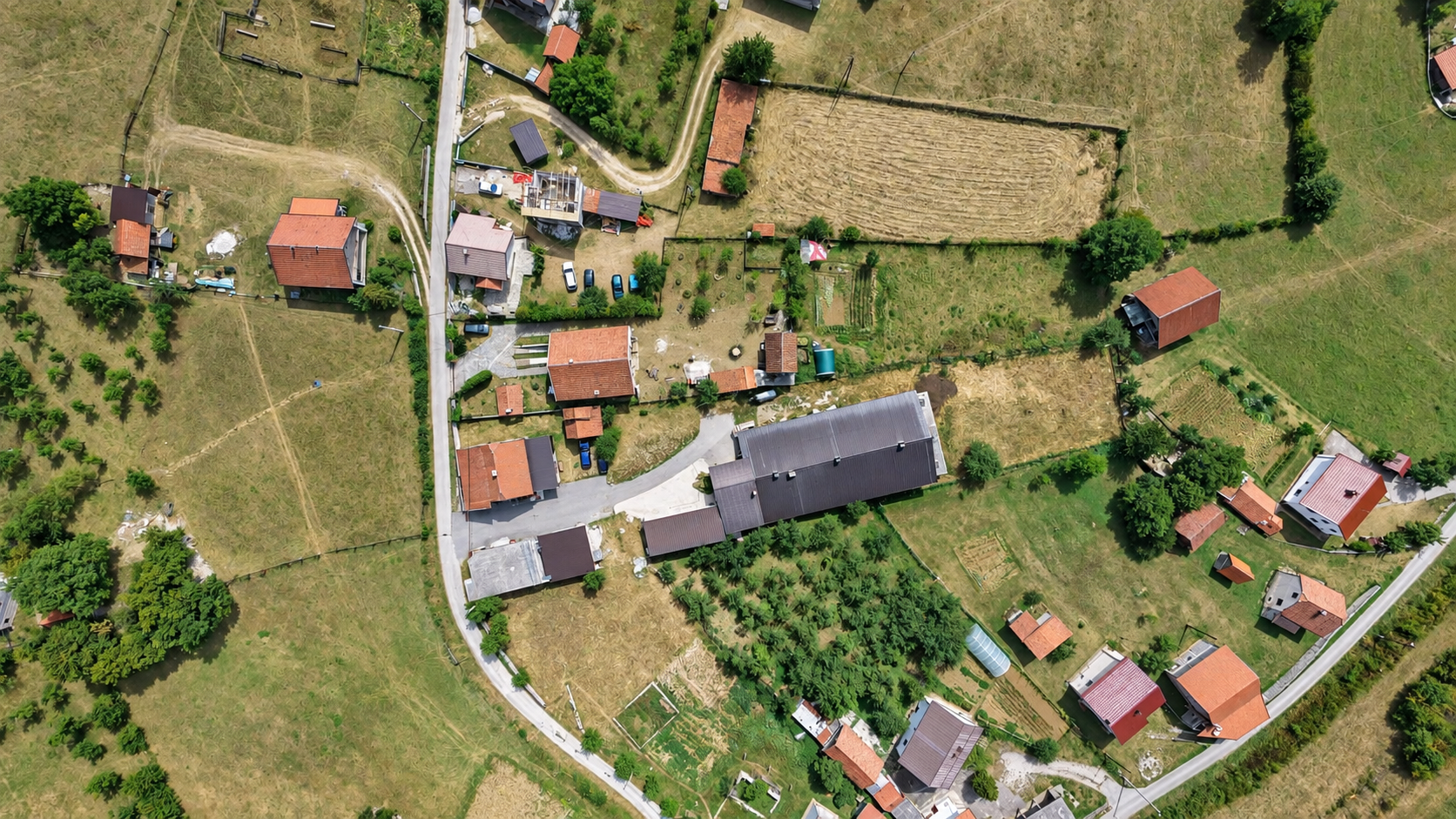
Three Hundred Pigs - And Some Music
Ben’s parents were away, which meant that he was covering for his father.
When we arrived, he was racing around trying to finish everything that needed doing before he could escape with us. There are around 300 pigs on the farm.
The family also produces very high-quality dried and cured meats and has won awards for what they produce.
While we waited for Ben, I started doing what I tend to do.
Research.
And I discovered something rather wonderful.
Apparently, this was the only pig farm in Bosnia and Herzegovina that played music to its pigs. So when Ben eventually appeared, I asked him.
“Is it true that you play music to the pigs?” “Well,” he said, “we used to.”
Used to? I showed him what I’d found online.
Well, I am delighted to report that, as a direct result of this conversation, music is once again being played to approximately 300 pigs in the Lašva Valley.
I’m not entirely sure what their musical preferences are, but perhaps that requires another visit.
Over the next two and a half days we actually became rather familiar with the workings of the farm. And I found it fascinating.
It also reminded me how easy it is to buy something from a shop without thinking very much about the work, knowledge and sheer physical effort involved in producing it.
There is an awful lot of work involved.
Villages With Long Memories
Ben also took us around some of the villages scattered across the slopes of Vlašić.
This really is an extraordinarily beautiful part of Bosnia and Herzegovina, but it is also an area with some very painful memories.
The Lašva Valley saw devastating fighting during the war of the 1990s, particularly during the Croat–Bosniak conflict of 1993 and 1994. Communities that had previously found themselves fighting a common enemy were suddenly fighting each other.
Standing there today, surrounded by mountains, forests and small villages, it can be difficult to reconcile the beauty of the landscape with what happened here. Some places still carry the physical scars more than thirty years later.
Ben wasn’t born when the war happened, but the story of his village has naturally been passed down. He told us that when the opposing forces approached in 1993, people had perhaps thirty minutes to leave. The village emptied.
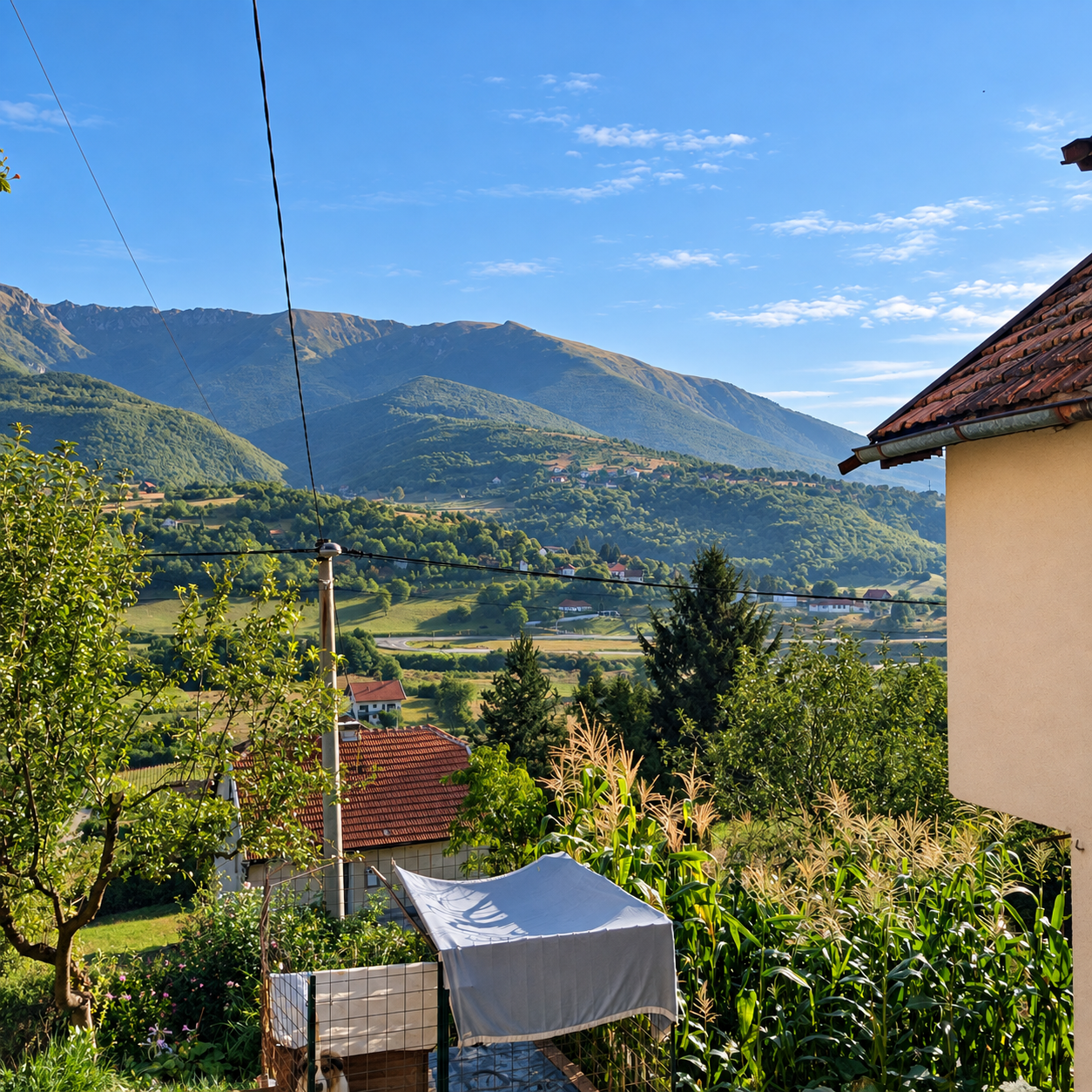
Looking across the Lašva valley from Ben’s village
What stayed with me, though, was something rather more hopeful.
Ben told us there were around 173 people living in the village in 1993. Today there are around 173 again. They may not all be the same families or the same people who left all those years ago. But nevertheless, I thought there was something rather positive about that number.
Life returned.
Tamara Discovers Travnik
We also took Tamara into Travnik.
Remarkably, she had never really explored the town before.
There was a city run taking place that evening, which meant many of the streets in the centre were closed, so we parked a little further away and walked in. And actually, that probably made it better.
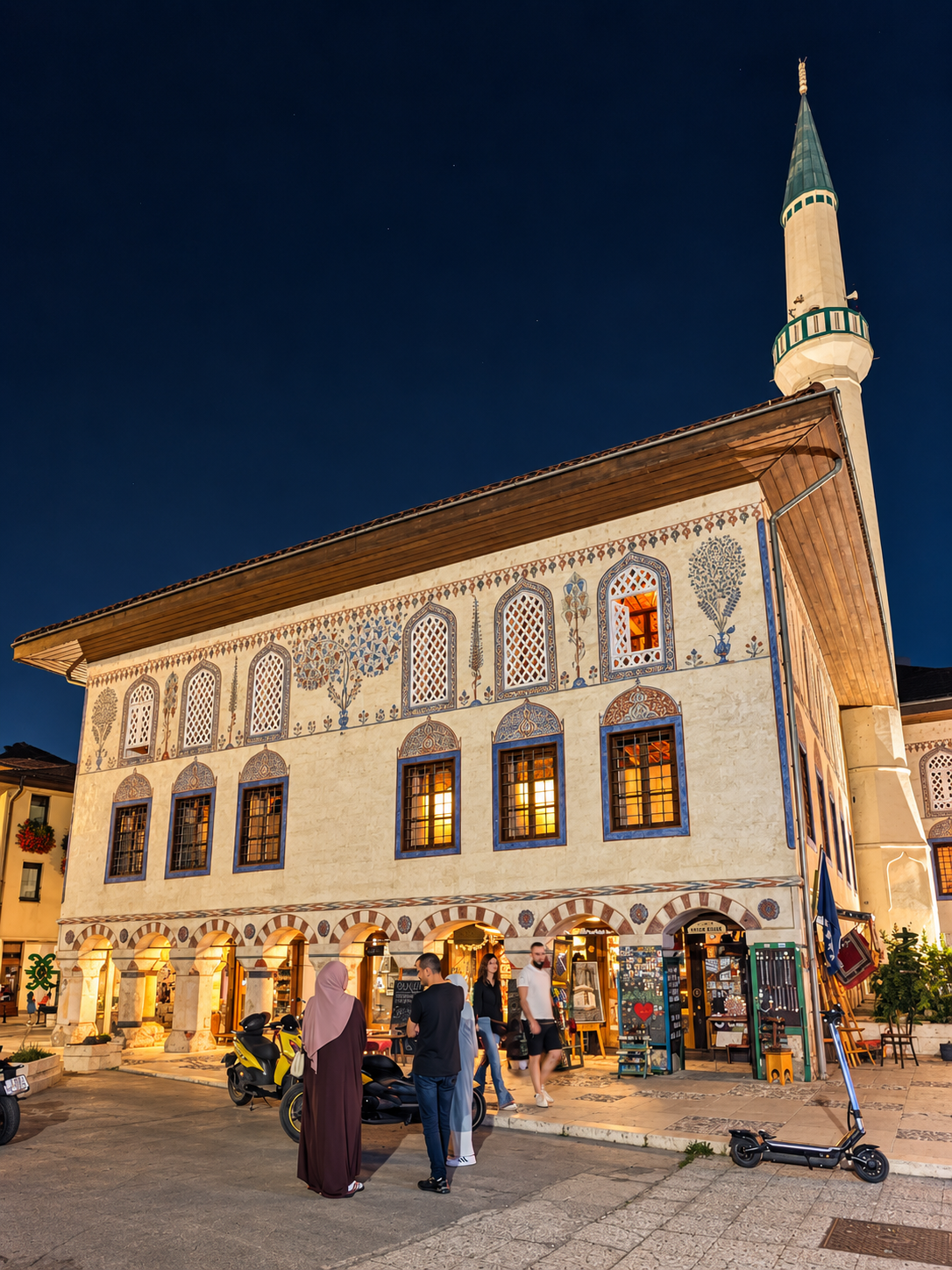
The Colourful Mosque in Travnik
We wandered. We watched people. We absorbed a little of the atmosphere.
Travnik has a rather nice vibe. And naturally, there was one important piece of research that had to be undertaken.
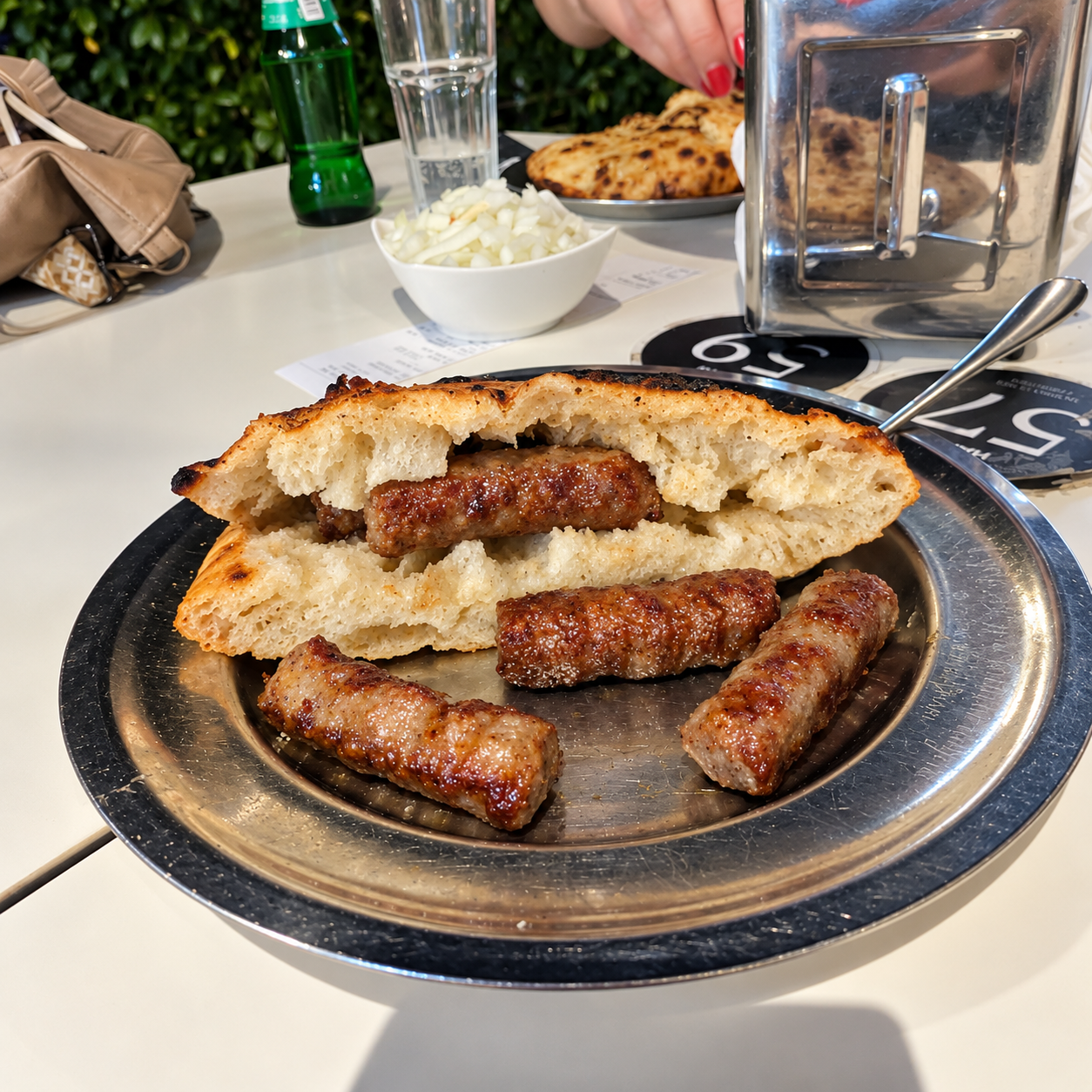
Travnički ćevapi.
We went to Hari, probably the best-known ćevapi restaurant in town, sat down and did the tourist thing properly.
Sometimes it is perfectly acceptable to be a tourist.
Into the Forest
One of my favourite parts of the visit, though, was somewhere completely different.
Prički Potok.
It’s a stream running through the forest, with a path following the water uphill.
We walked perhaps a kilometre or a kilometre and a half. Nothing particularly strenuous. Just forest, water and that wonderful feeling of getting further and further away from everything.
Along the way are little shelters constructed largely from fallen timber.
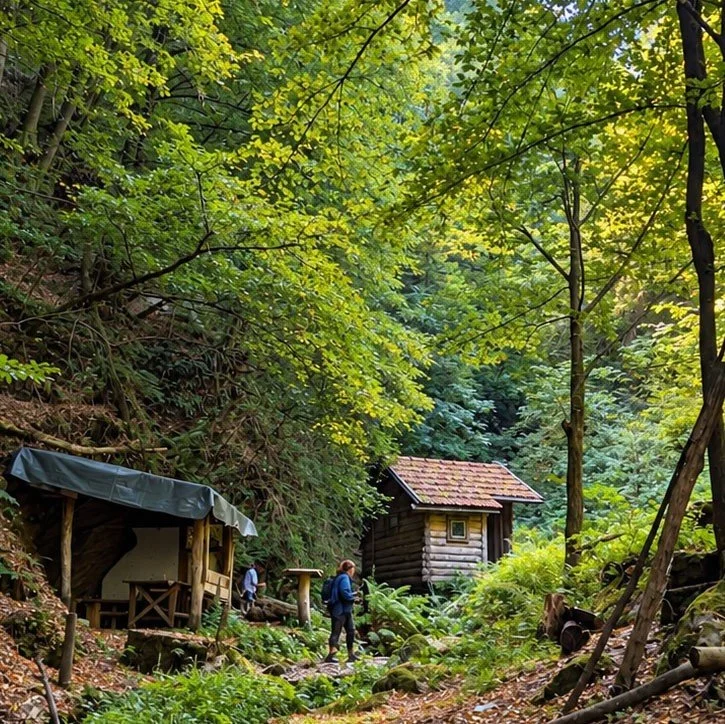
Ben and others have been working on them so people can come into the forest, sit down, shelter from bad weather or perhaps spend an afternoon cooking a barbecue.
Nothing commercial. Nothing polished.
Just people creating somewhere pleasant to spend time.
I loved it.
We made a video while we were there, which I’ll try to share at some point.
I also had the little DJI drone with me and sent that buzzing through the forest.
Ben was amazed at just how capable these tiny drones have become, particularly when it comes to avoiding trees and other obstacles.
To be fair, so am I.
Up on Vlašić
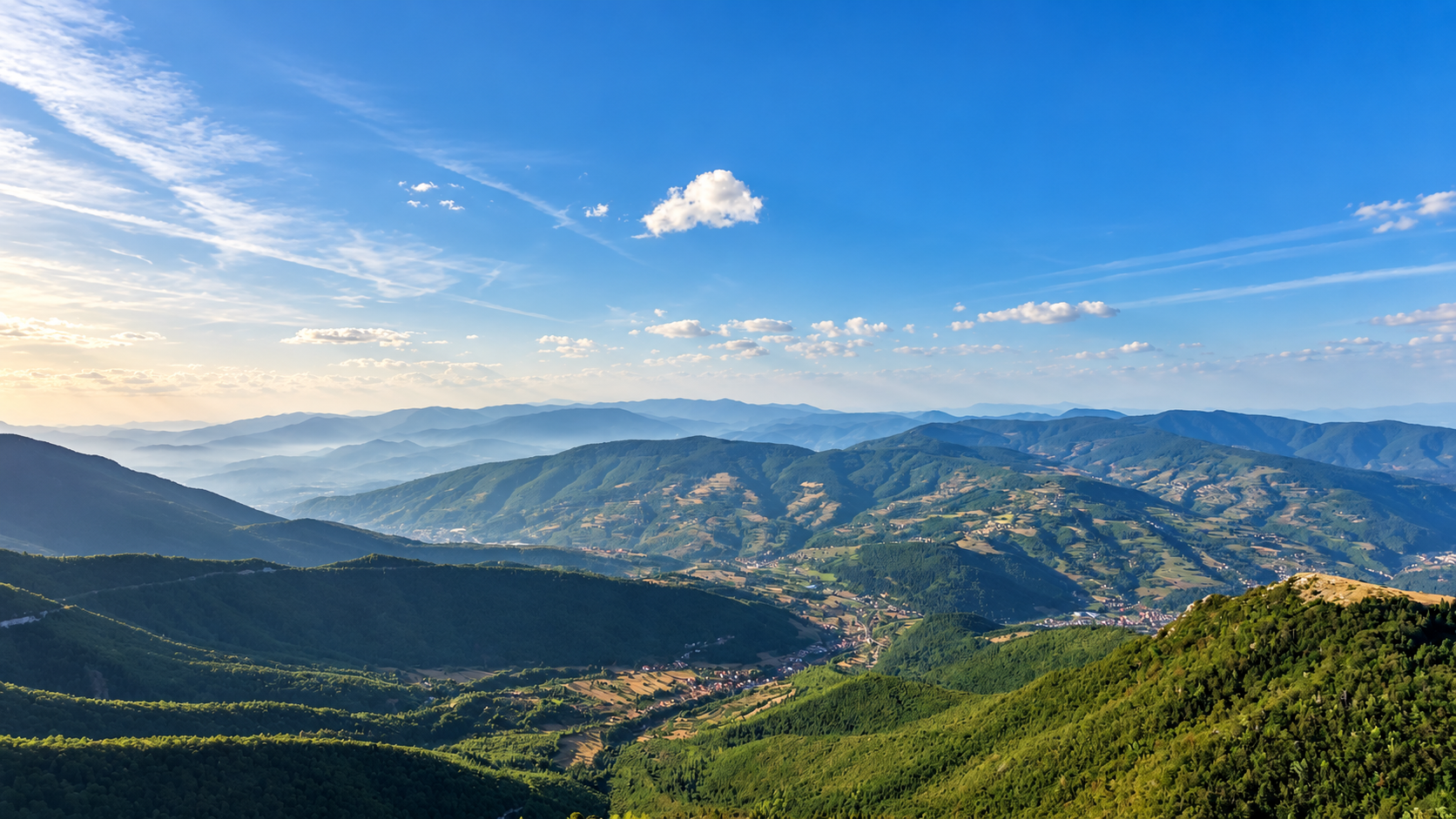
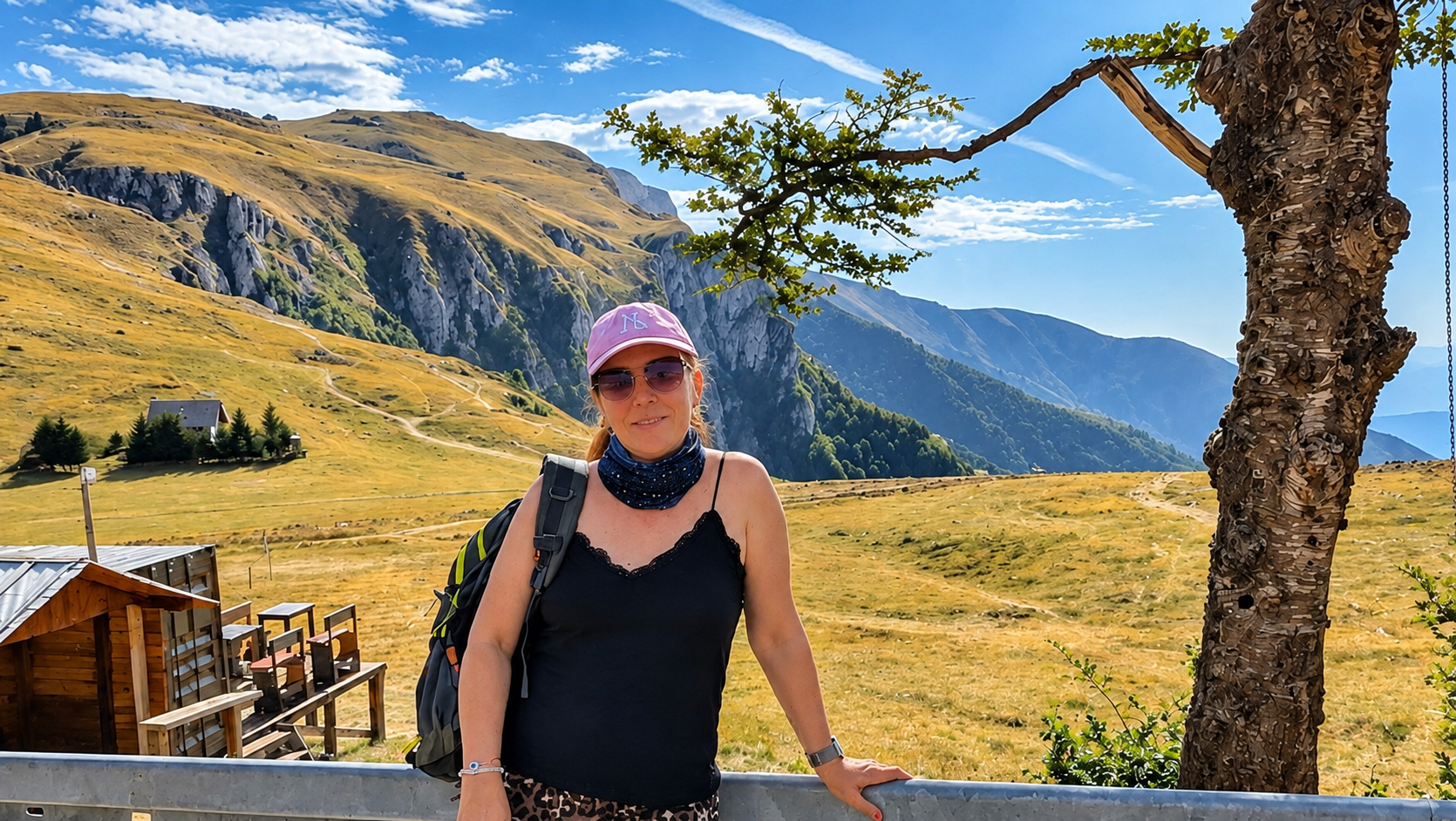
Standing on the Vlašiċ taking in the View
For one night we moved right up onto Vlašić and stayed at the Erik Brandis mountaineering lodge.
This changed everything.
From the lodge we could take short walks out towards the edges of the mountain and look down into enormous valleys and ravines.
The views are breathtaking.
There really isn’t another word for them.
I wasn’t feeling quite at my best during the trip, so long hikes weren’t really an option.
Fortunately, Ben has a 4x4.
Perfect.
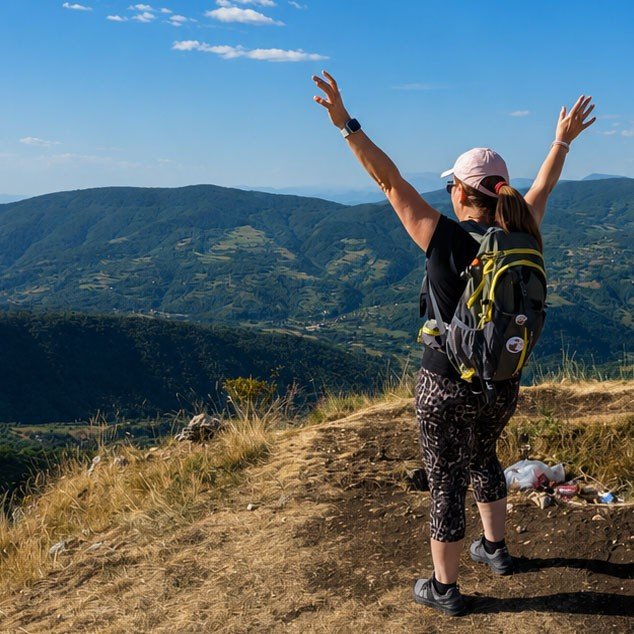
It meant we could explore much more of the mountain than I could have managed on foot.
Tamara also discovered what I believe is now called an “Instagram spot.”
There’s a swing up on Vlašić, not far from the mountaineering lodge, positioned so that you can sit there with an enormous mountain landscape behind you.
Naturally, photographs had to be taken.
A Necessary Break
Looking back, I think we needed those few days more than we realised.
Back home in the village, temperatures had been hovering between 34 and 37 degrees. It was exhausting.
Up on Vlašić? Around 25. Suddenly we could breathe again.
We could sit outside. We could walk without feeling that the sun was trying to cook us.And perhaps more importantly, we had temporarily stepped outside our normal routine.
For two and a half days our world became a pig farm, little mountain villages, forest streams, Travnik ćevapi, bumpy tracks in Ben’s 4x4 and enormous views from the top of Vlašić.
Nothing particularly grand. No luxury hotel. No carefully planned itinerary.
Just staying with a friend who knows his part of Bosnia extremely well and was happy to show it to us.
Those are usually the trips I remember.
And the car?
It got us there. It got us around.
And, perhaps most importantly, it got us home again.
At the moment, I’ll take that as a win.
And Finally
There won’t be a Sunday Edition next week. My nephew is coming over from England with his girlfriend, and we’ll be spending a few days showing them around this part of Bosnia and Herzegovina.
I’m rather looking forward to seeing the place through their eyes.
So rather than worrying about writing a newsletter while they’re here, I’m going to enjoy having them with us, and I’ll be back with the next Sunday Edition the week after.
In the meantime, I’d really like to hear from you.
If something in this edition made you think of a question, about Vlašić, Travnik, life here in Bosnia and Herzegovina, or even those 300 music-loving pigs then do leave a comment below.
And if there’s something about life here you’ve always wondered about, ask me. Your question might even give me an idea for a future Sunday Edition or podcast episode.
Until the Sunday after next,
Bests,
David