How Pirate Radio Changed My Life
Finding Something Unexpected on the Dial
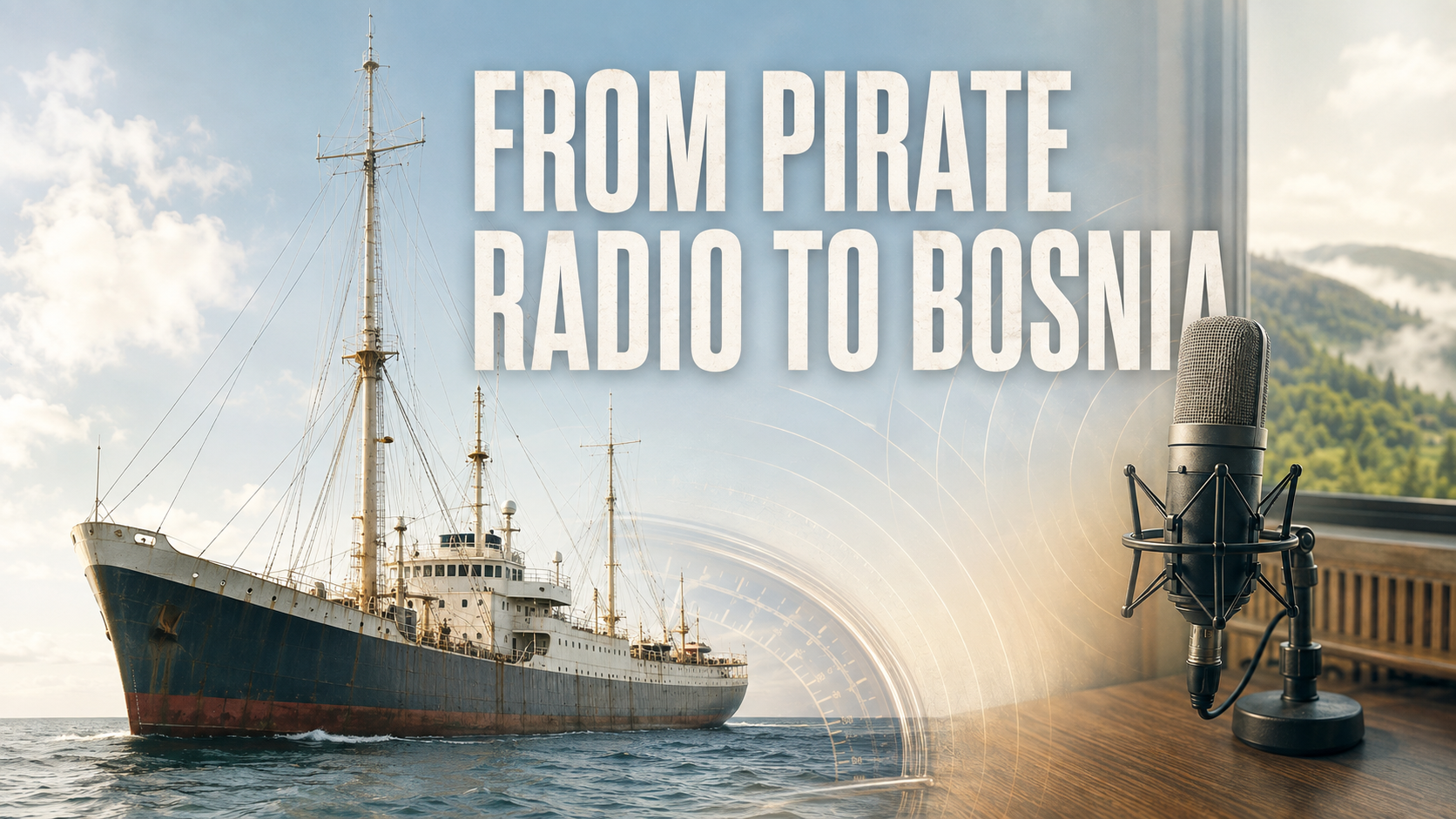
Finding Something Unexpected on the Dial
There was something magical about tuning across a radio dial when I was young. Between the whistles, crackles and bursts of static, a distant voice might suddenly appear.
During the 1960s, some of those voices came from offshore radio stations such as Radio Caroline and Radio London. They broadcast from ships anchored outside British territorial waters and offered something very different from the established BBC.
They played the music young people wanted to hear. Their presenters sounded informal, enthusiastic and slightly rebellious. To a young teenager in London, it felt as though they were talking directly to us.
I didn’t understand broadcasting regulations or the business behind the stations. I simply knew that something exciting was coming through that little loudspeaker.
The Day the Stations Fell Silent
On 14 August 1967, the Marine Broadcasting Offences Act came into force. It became illegal for British citizens and companies to work for, advertise on, finance or supply the offshore stations.
Most of them closed. Radio Caroline famously continued, but the offshore era that had transformed British listening was beginning to change.
The government could silence most of the transmitters, but it couldn’t entirely suppress the idea. Six weeks later, the BBC launched Radio 1, employing several presenters who had worked aboard the pirate ships.
For me, the idea of independent broadcasting had already taken hold.
From Listener to Broadcaster
In 1968, I became involved with Radio Jackie, a land-based pirate station serving South London.
Its programmes were recorded on cassette tapes and transmitted from equipment that had to be moved regularly to avoid the authorities. At one stage, the equipment was carried around the countryside in a pram and powered by batteries in fields.
Listeners sent requests by telephoning a particular public telephone box. We would stand outside waiting for it to ring, rush inside and write down the dedication.
It wasn’t polished, but that hardly mattered. We were taking voices and music and sending them through the air. Somewhere, somebody was listening.
Learning the Craft
My military career later took me to Germany, where I volunteered with the British Forces Broadcasting Service.
BFBS described itself as “your link with home.” For service personnel and families living overseas, it provided music, information and a valuable sense of connection.
Pirate radio had given me excitement. BFBS began teaching me the craft: preparation, timing, operating equipment and remaining calm when something inevitably went wrong.
In 1993, I launched Punch FM, a 28-day Restricted Service Licence station celebrating the 50th anniversary of the Royal Electrical and Mechanical Engineers. The station also raised money for the corps charity.
Further experiences followed with BBC Radio Surrey, Reading’s 2-TEN FM and another period with BFBS, this time as a contract presenter.
Each stage taught me something different.
Taking Radio to Bosnia
I arrived in Bosnia and Herzegovina in 1998, when the country was still rebuilding after the war.
Radio remained enormously important. Smartphones, social media and widespread high-speed internet access were still far in the future.
It was in this environment that Oksigen FM began.
Our slogan was “All Around You” - Svuda Oko Vas. We played international music at a time when many young Bosnians felt isolated from the wider world and found travelling abroad extremely difficult.
Oksigen offered them a window. In creating it, I drew upon everything I had learned from pirate radio, BFBS, Punch FM, the BBC and commercial radio.
Still Following the Signal
Today, I no longer need a radio frequency, transmitter or building filled with equipment. I produce An Englishman in the Balkans from my home near Laktaši in northern Bosnia.
Podcasting is different from traditional radio, but its intimacy is familiar. It remains one voice speaking to one listener.
The podcast allows me to share a Bosnia rarely encountered in international reporting: its villages, landscapes, history, food, conversations and everyday life.
Almost sixty years after discovering offshore radio, the equipment has changed completely. But the impulse to communicate independently remains.
The original ships may have gone silent, but their signal never entirely left me.