A 13-Year-Old's Perspective
I've been living in Bosnia and Herzegovina for more than 25 years now, and I sometimes wonder whether I've become a little too accustomed to seeing the country through the eyes of my own generation.
Most of my conversations about Bosnia have been with adults. People who remember Yugoslavia, who lived through the war, or who have watched the country change over the decades.
But recently, I had the opportunity to sit down with someone whose experience is entirely different.
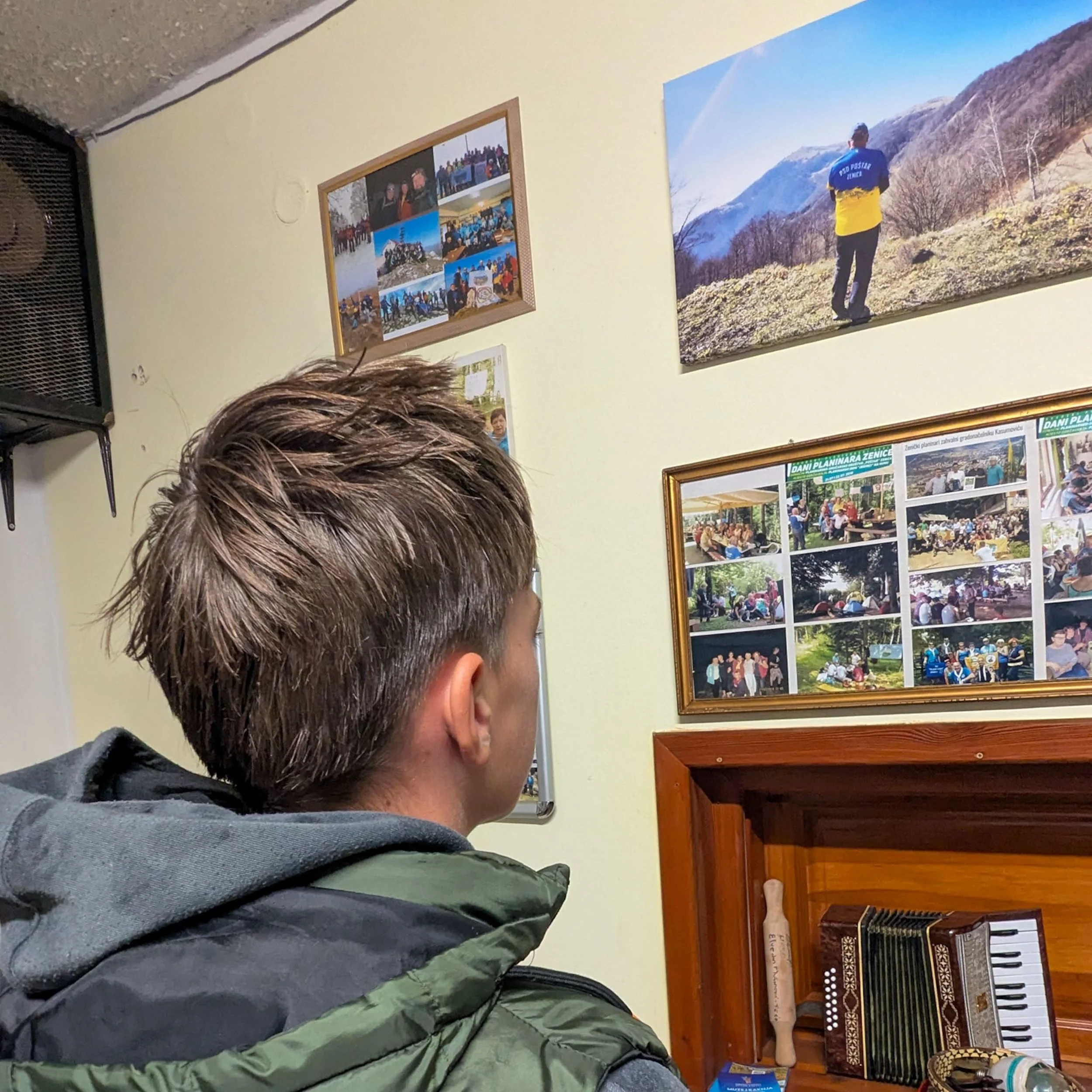
His name is Anes. He's 13 years old, lives near Zenica in central Bosnia, and has a remarkable command of English.
And he certainly isn't short of opinions.
The freedom of growing up in Bosnia
We began by talking about the ordinary things in his life.
Football, friends, school and what he enjoys doing when he isn't studying.
Anes plays football, enjoys researching history and loves exploring the countryside around his home.
When I asked him what he particularly liked about growing up in Bosnia, he spoke about the country's nature, music and folklore.
But one phrase stayed with me.
"You just really have your freedom."
He was talking about the freedom of being 13. The ability to enjoy life without having to worry too much about earning a living or going to work.
At 73, I rather liked hearing that.
A young defender of Bosnian traditions
One of the more unexpected parts of our conversation concerned traditional Bosnian music.
The previous evening, we'd heard a sevdalinka song that had been reworked using artificial intelligence into something resembling country and western music.
Anes wasn't impressed.
In fact, he was quite upset by it.
He felt that changing traditional music in this way was disrespectful to something that had been part of Bosnian culture for generations.
I found that fascinating.
Here's a young man growing up in a world of online gaming and artificial intelligence, yet he's deeply protective of his country's musical heritage.
And when we talked about ChatGPT, he explained that he uses it for research but never entirely trusts what it tells him.
A useful lesson for all of us, perhaps.
The Bosnia he'd show a visitor
I asked Anes to imagine that a 13-year-old from Britain had come to visit.
Where would he take them?
What would he want them to see?
His first thought was Bosnia's nature and culture.
But when I pressed him for somewhere specific, he chose his own village.
Not Sarajevo. Not Mostar. Not one of the country's better-known attractions.
His village.
He talked about the people, the countryside and even the figs growing in a neighbour's garden.
It was a lovely reminder that the places which mean the most to us aren't necessarily the ones that appear in tourist brochures.
Loving Bosnia, but thinking about leaving
Then our conversation became rather more serious.
I asked whether he imagined spending his adult life in Bosnia.
His answer was straightforward.
He would consider leaving.
He spoke about wages, rising prices and the difficulty of making a living. Germany, he suggested, might offer better opportunities.
Of course, he's only 13. His views will undoubtedly develop as he grows older.
But I found it interesting that someone so young was already thinking about these things.
And perhaps a little sad, too.
Because throughout our conversation, his affection for Bosnia was unmistakable.
He loves its countryside, traditions and people.
Yet he's uncertain whether his future will be here.
A village boy connected to the world
We finished by talking about his English.
Much of his confidence, he explained, comes from online gaming with people around the world.
From a village near Zenica, he regularly communicates with people from Britain, America, Canada and beyond.
It's a fascinating contrast.
A young person deeply connected to his local traditions, yet completely comfortable in an international online community.
I came away from our conversation thinking that perhaps we adults should spend a little more time listening to young people.
Not because they have all the answers.
But because they're already thinking about the world they're going to inherit.
And sometimes, they see things rather differently.
I'd be interested to hear your thoughts, particularly if you grew up in Bosnia or have children or grandchildren growing up here today.