Donald Reeves and the Ferhadija Mosque
A Promise Kept in Banja Luka
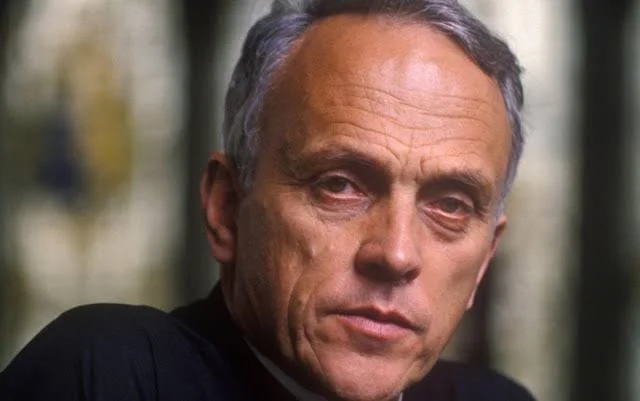
Reverend Donald Reeves MBE
There are buildings you see so often that eventually you almost stop noticing them.
For me, one of those buildings is the Ferhadija Mosque in Banja Luka.
It stands close to the centre of the city today, its stone walls and minaret once again part of the skyline. People walk past it. Cars drive past it. Visitors stop to take photographs.
It has become ordinary again.
And perhaps that is important.
Going back into my audio archive
This year marks ten years since the Ferhadija reopened, and the anniversary sent me back into my audio archive.
In May 2016, the day before the reopening ceremony, I sat down in a Banja Luka hotel coffee bar with an English Anglican priest called Donald Reeves.
Donald died in October 2024 at the age of 90.
Listening to our conversation again therefore feels rather different now.
At the time, I was simply curious. Why had an Anglican priest from England spent years becoming involved with the reconstruction of a mosque in Bosnia and Herzegovina?
I don't think I fully appreciated what I was recording.
A very dangerous man
Donald had been rector of St James's Piccadilly in London, a broadcaster, campaigner and peace builder.
Margaret Thatcher had once apparently described him as “a very dangerous man”.
Donald told that story with considerable amusement.
But his years in Bosnia had also taught him something more serious.
By the time we spoke in 2016, he'd become increasingly sceptical about the way outsiders sometimes approached post-war Bosnia.
He admitted that people like him had arrived talking confidently about justice, forgiveness and peace.
Experience had made him less certain.
Those words, he told me, belonged to the people who had actually lived through what happened here. Outsiders couldn't decide when they should be used.
“Where's my mosque?”
Donald had also grown suspicious of grand statements about reconciliation.
He remembered talking enthusiastically about what a rebuilt Ferhadija might symbolise — cooperation, peace, reconciliation.
The Mufti had a rather more practical response.
“Okay, but where's my mosque?”
I love that question.
You can hold conferences about reconciliation. You can write reports about it. You can make speeches.
But eventually somebody has to do something.
Someone has to put the stone back.
The people who became his teachers
Towards the end of our conversation, Donald stopped talking about organisations and projects and began talking about people.
People who had suffered. People who had returned home. People whose courage had clearly affected him deeply.
“They all become our teachers,” he told me.
Not beneficiaries.
Not case studies.
Teachers.
And then Donald remembered seeing the rebuilt Ferhadija minaret.
It stopped him in his tracks.
“Something we've done in this country has worked,” he said.
Ten years later, Donald is gone.
The minaret is still there.
Perhaps that is enough. Not proof that everything has been reconciled. Not some grand declaration about peace.
Simply something that was destroyed and returned.
And an English priest who once made a promise lived long enough to see that promise become stone.