When Banja Luka Dressed Up
A Matura Evening in Bosnia
It is a warm Monday evening in May, around six o’clock, the temperature still sitting at about 28 degrees, and the city centre is full of life. Tamara is meeting old friends, I have a little time to myself, and my only real plan is to wander, observe, and perhaps enjoy a pint or two of what I still maintain are among the best poured glasses of Guinness outside the British Isles.
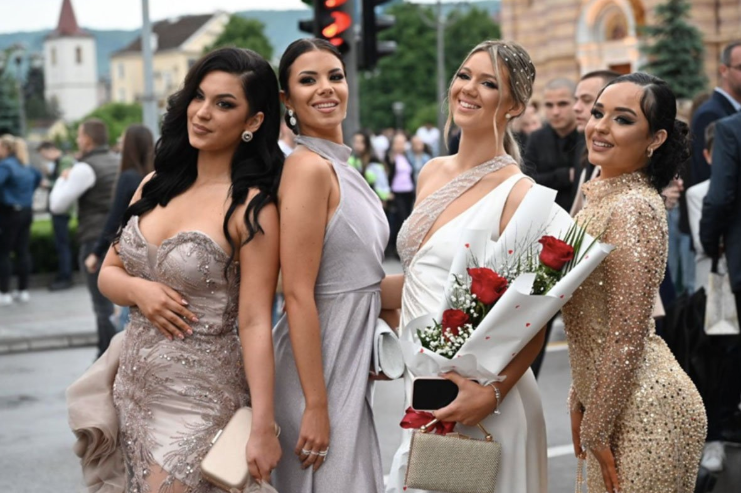
Maturantkinje (c)Velibor Tripić
But, as so often happens in Bosnia and Herzegovina, the story finds me before I go looking for it.
The centre of Banja Luka has been transformed. Young people are everywhere, dressed with extraordinary care and elegance.
Photographers are busy arranging groups, proud families are watching from the edges, bouquets are being held like works of art, and the city has taken on the feeling of a red carpet.
It is Matura.
Matura is often translated as graduation, but that does not quite capture it.
Here in Bosnia and Herzegovina, and across much of the Western Balkans, it is more than simply finishing school. It is part graduation, part prom, part formal ball, and very much a public rite of passage.
In this episode, I reflect on what makes matura so striking: the glamour, the family pride, the public nature of the celebration, and the way the city itself becomes part of the occasion. I talk about the young women, the maturantkinje, in their carefully chosen dresses, the young men doing their best to look effortlessly smooth, and the families standing proudly just out of shot.
But beneath the elegance and the photographs, there is something deeper.
Matura Marks a Threshold.
One chapter is ending, another is beginning. For young people in Bosnia and Herzegovina, that future can be exciting, uncertain, and sometimes complicated.
Some will stay. Some will leave.
Some will study in Banja Luka, Sarajevo, Belgrade, Zagreb, Vienna, Ljubljana, or further away.
Some may feel pulled between home and opportunity.
And that gives the evening a quiet poignancy.
This is not simply a story about dresses, suits, flowers, and photographs.
It is a story about memory. About families investing in a moment. About a city pausing to celebrate its young people.
About the Western Balkans’ deep sense of occasion. And about how ordinary public spaces can still become places of ceremony, pride, and beauty.
Bosnia and Herzegovina is not only found in the big dramatic stories, the mountains, rivers, old bridges, politics, or complicated headlines.
Sometimes it is found in a warm evening in Banja Luka, in a bouquet, in a nervous young man adjusting his jacket, in a group of young women laughing as a photographer tries to organise them, and in proud parents standing just out of shot.
Sometimes, this country reveals itself most clearly in the small public rituals that make memory visible.