When a Broken Bridge Says Everything About Bosnia
How a damaged border crossing at Gradiška became a symbol of political delay, economic frustration, and everyday life made harder than it needs to be in Bosnia and Herzegovina.
Every now and again, a story comes along in Bosnia and Herzegovina that seems to explain far more than the event itself.
The damaged bridge at Gradiška is one of those stories.
On the surface, this is about a border crossing. It is about the old bridge over the Sava River between Bosnia and Herzegovina and Croatia. It is about traffic being stopped, lorries being diverted, queues forming, and drivers losing hours of their lives at alternative crossings.
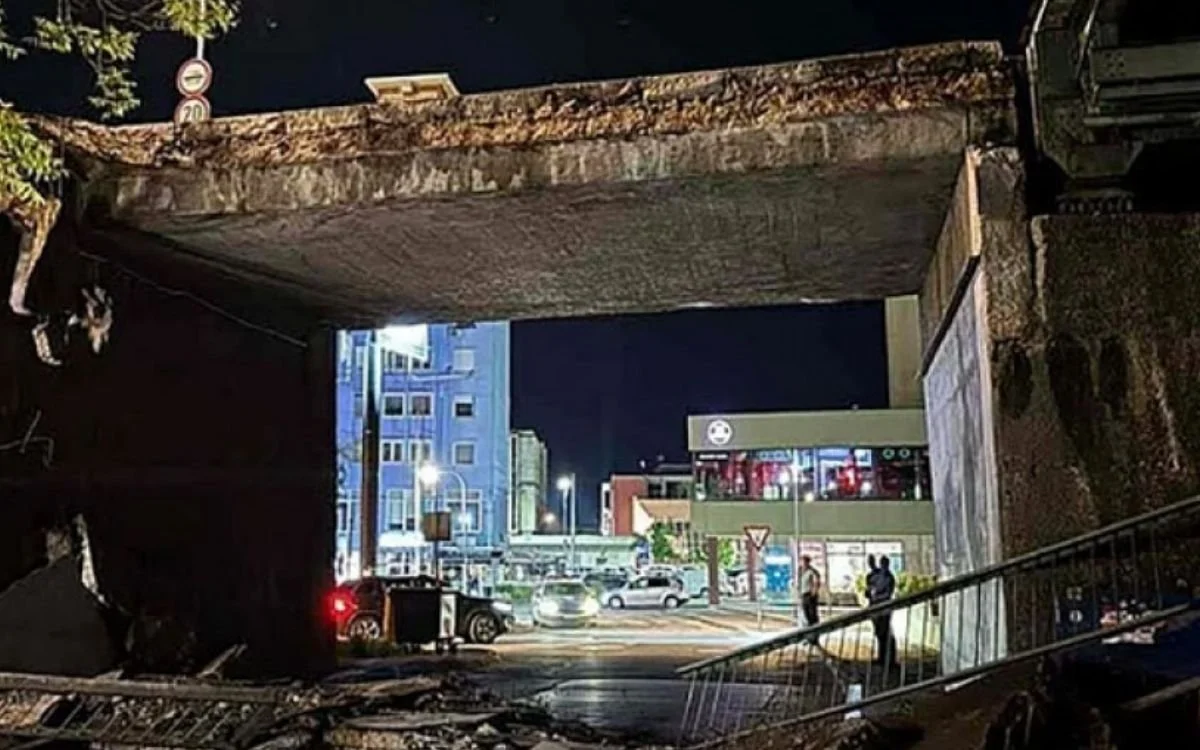
The Damage at the Gradiška Bridge
But beneath that, it is about something much bigger.
It is about politics. It is about frustration. It is about the gap between what Bosnia and Herzegovina could do, and what its political system too often allows it to do.
Hidden beneath a mountain near Konjic lies Tito’s Bunker, officially known as ARK D-0, the Atomic War Command bunker built during the Cold War for Josip Broz Tito and Yugoslavia’s military and political leadership.
Above ground, life carried on as normal. The Neretva River flowed through Konjic, people drank coffee in cafés, and traffic moved along the road between Sarajevo and Mostar.
Beneath the surface, though, was a completely different world.
Why Gradiška Matters
For those of us living in the Banja Luka region, Gradiška is not just another border crossing.
It is one of the main routes north out of Bosnia and Herzegovina and into Croatia, the European Union, and the wider European road network. From there, the road leads towards Zagreb, Slovenia, Austria, Germany, and much of the Bosnian diaspora.
Families use it. Hauliers use it. Exporters use it. Tourists use it. People travelling for work, medical appointments, holidays, and airport connections use it.
So when Gradiška stops working properly, it is not a small local inconvenience. It becomes a real economic and human problem.
On 19 May 2026, Bosnia and Herzegovina’s Border Police said traffic was suspended at the Gradiška–Stara Gradiška crossing after part of the protective fence on the bridge over the Sava collapsed, creating a serious safety risk. Thankfully, no injuries were reported.
But the disruption was immediate.
Clip from Bosnian TV about the Bridge issue. I am using this clip just to highlight details I mention. I added subtitles which will be of use to non local language speakers.
The Cost of Delay
Traffic had to be diverted. Queues grew. Lorry drivers faced long waits. Reports described trucks waiting up to 16 hours at Jasenovac/Donja Gradina, with passenger vehicles also caught in delays.
That is not simply annoying.
That is lost money. Lost working time. Delayed goods. Missed appointments. Frustrated families. Businesses trying to function while the system around them makes life harder than it needs to be.
And this is where the story becomes especially frustrating.
Because there is already a new Gradiška bridge and border crossing infrastructure. The temporary relocation of the existing crossing to the new location began on 19 May 2026, after the old bridge problem forced action. The Indirect Taxation Authority later clarified that this was not the formal opening of a new temporary crossing, but a temporary relocation of the existing Gradiška crossing to the new site, valid until 19 August 2026.
Which leaves the obvious question.
If traffic could be moved there in an emergency, why did it take an emergency?
When Practical Problems Become Political
This is where Bosnia and Herzegovina becomes difficult to explain to outsiders.
The country is full of capable people. Engineers, drivers, business owners, customs staff, local officials, and ordinary citizens all understand perfectly well why a crossing like Gradiška matters.
The problem is rarely a lack of intelligence.
The problem is a political culture where practical solutions can become trapped in arguments over institutions, authority, revenue, responsibility, and blame.
From Banja Luka, the issue has been framed as obstruction from Sarajevo and state-level institutions. From other perspectives, the delays have been linked to legal procedures, institutional responsibilities, and disputes around revenue distribution.
But for the driver sitting in a cab for hours, those arguments offer little comfort.
For the exporter waiting on delivery times, they do not solve the problem.
For the family trying to cross the border, they are just more noise.
A Bridge Is Supposed to Connect
A bridge is supposed to connect people.
It connects towns, countries, economies, families, and opportunities.
But at Gradiška, for too long, the bridge has also shown something else: the cost of delay, division, and political point scoring.
Bosnia and Herzegovina is a beautiful, generous, complicated country. I say that as someone who loves living here. But perhaps that is why stories like this frustrate me so much.
Because this country has so much potential.
And yet, too often, ordinary life is made harder than it needs to be.
The Gradiška bridge story is not only about concrete, customs, traffic, and repairs. It is about trust. Trust that public money leads to public benefit. Trust that institutions can act before a crisis. Trust that common sense can win before damage is done.
And once again, the bill is not paid by those making the speeches.
It is paid by the driver in the queue, the business waiting for goods, the family delayed at the border, and a country that keeps losing time it cannot afford to waste.