Why Are Elections in Bosnia So Complicated?
Bosnia and Herzegovina has just been to the polls.
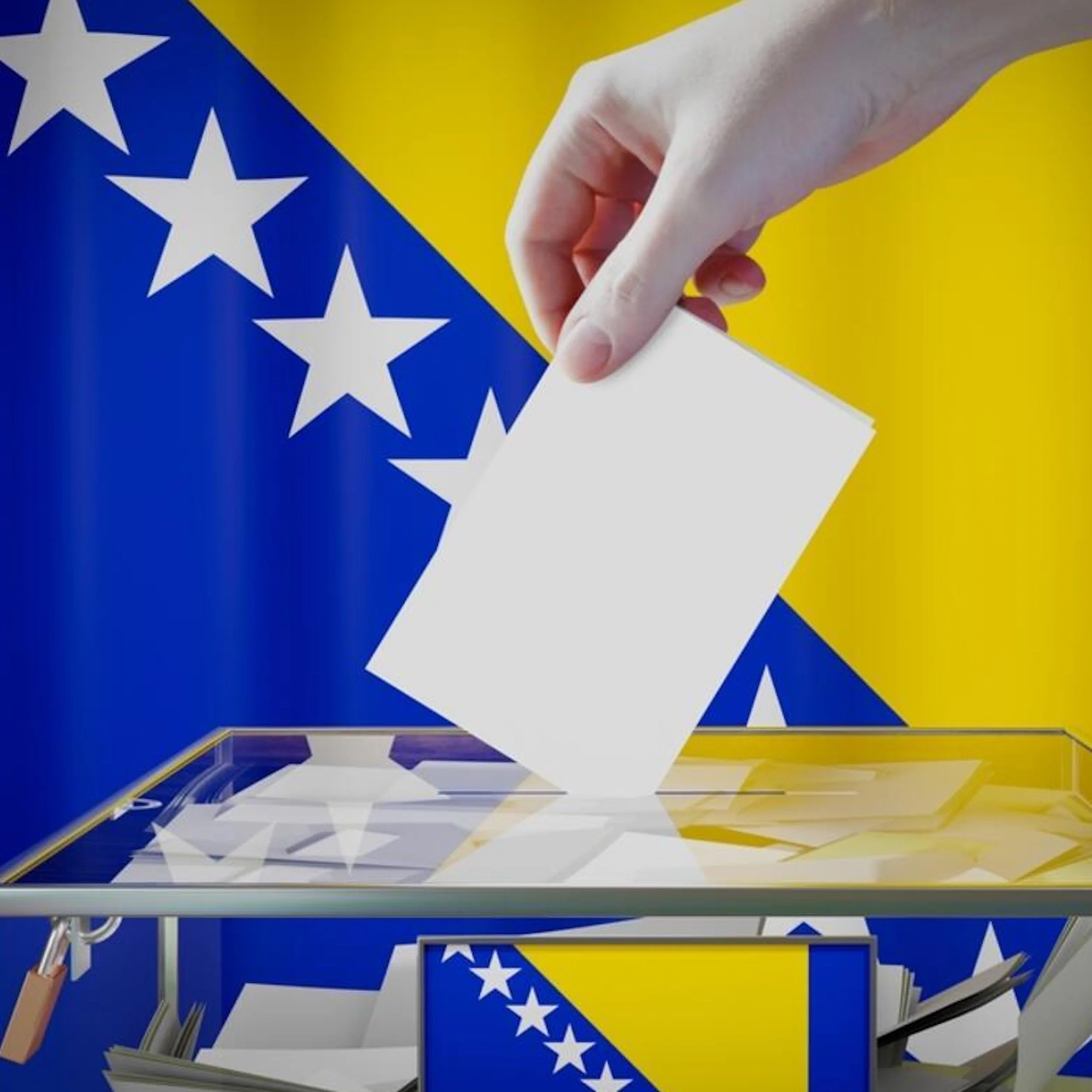
If you’re looking at the country from Britain, or indeed from almost anywhere outside the Balkans, that probably sounds straightforward enough.
People vote. Somebody wins. A government gets formed.
Except this is Bosnia and Herzegovina, and after living here for more than 25 years, I’ve learned that things are rarely quite that simple.
Before we go any further, though, this isn’t a post about politics.
I have my own views about politics here, of course, but I’ve always been rather careful about expressing them publicly. I wasn’t born here and I don’t vote here. I’m much more interested in trying to explain the country I live in than telling people what I think they should do with it.
And elections are a fascinating example.
One country, several layers
Bosnia and Herzegovina is one country, but within it are two entities: the Federation of Bosnia and Herzegovina and Republika Srpska, where I live.
There’s also Brčko District, which has its own particular status.
Then, within the Federation, there are ten cantons, each with its own assembly.
Republika Srpska doesn’t have cantons.
So already, depending upon where you live in Bosnia and Herzegovina, the political structure around you can be different.
And then there’s the Presidency.
Three members of the Presidency
Bosnia and Herzegovina doesn’t have a single president in the way many countries do.
Instead, it has a three-member Presidency: one Bosniak, one Croat and one Serb.
Even that isn’t simply a matter of everyone in the country choosing between all the candidates.
If you’re registered to vote in the Federation, you can vote for either the Bosniak or Croat member of the Presidency. In Republika Srpska, voters elect the Serb member.
Add elections for representatives at state, entity and, in the Federation, cantonal level, and you begin to understand why a Bosnian election can be rather difficult to explain in a couple of sentences.
Why is it so complicated?
To understand that, you have to understand something of Bosnia and Herzegovina’s recent history.
The country's present constitutional structure grew out of the Dayton Peace Agreement, which brought the war to an end in 1995.
The priority at the time was peace and creating a system capable of balancing representation and power between the country’s constituent peoples.
Whether that system works well today, or whether it should be changed, is an entirely different conversation — and one for the people of Bosnia and Herzegovina.
What interests me is simply trying to understand it.
And even after more than a quarter of a century here, I’m still learning.
In the latest episode of An Englishman in the Balkans, I try to explain Bosnia and Herzegovina’s elections in everyday language — without party politics, predictions or telling anyone how they should vote.
Because the next time you hear somebody say, “Bosnia has just had an election,” you’ll know there’s rather more going on beneath that simple sentence than you might think.