The Sarajevo Haggadah
From Medieval Spain to Bosnia and Herzegovina
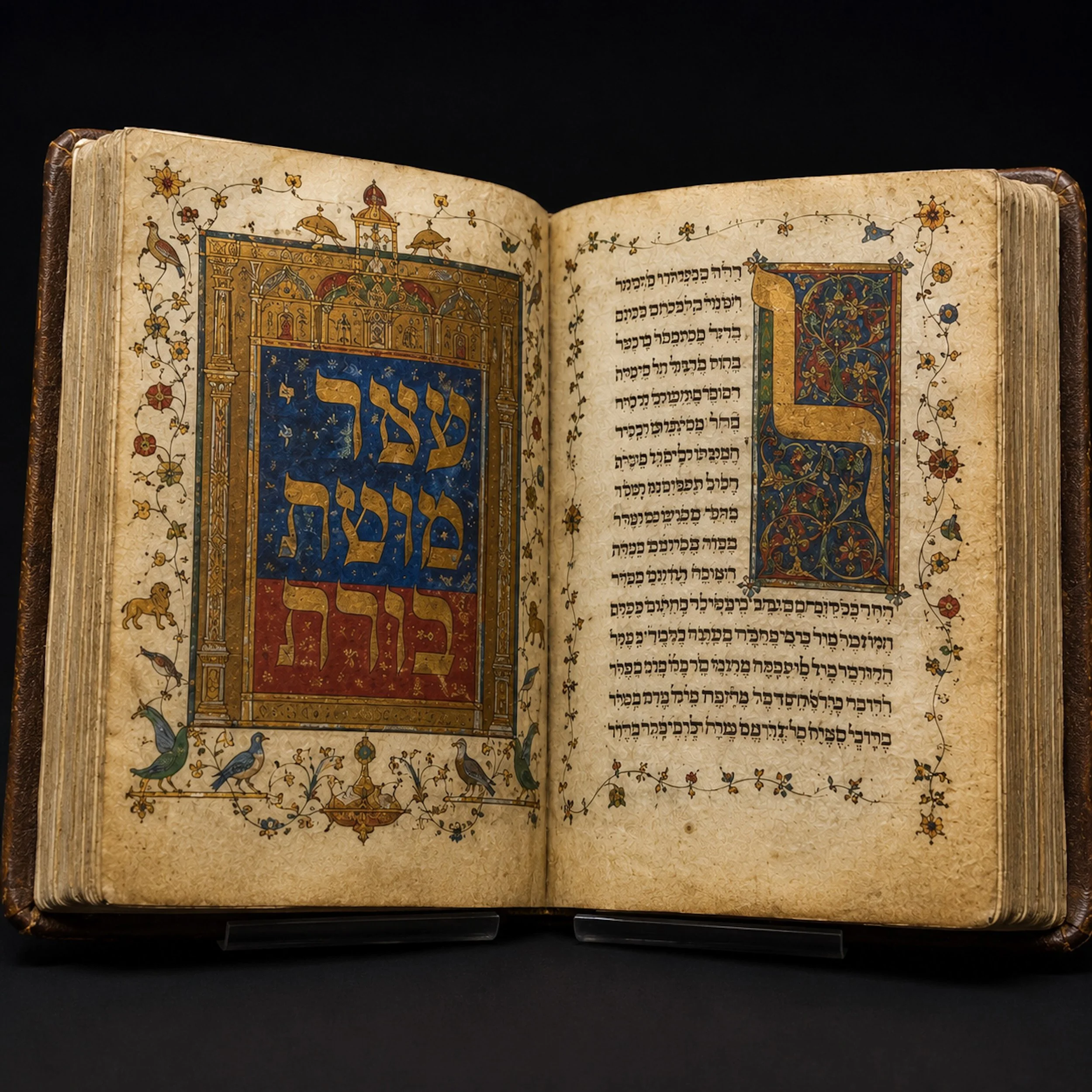
There are certain objects that seem to carry far more than their own history. The Sarajevo Haggadah is one of them.
Created in medieval Spain around the middle of the fourteenth century, this beautifully illustrated Jewish manuscript has travelled across countries, faiths, empires and periods of terrible upheaval. Today, it belongs to the collection of the National Museum of Bosnia and Herzegovina in Sarajevo.
In this episode, I speak with Dr Aleksandra Bunčić, an art historian and scholar who has devoted years to studying the manuscript, its illustrations and the many mysteries that still surround its journey.
A Haggadah is traditionally read during Passover and tells the story of the Exodus: the liberation of the Israelites from slavery in Egypt. The Sarajevo Haggadah is especially remarkable because of its richly painted pages. Its illustrations cover stories from Genesis and Exodus, including the Creation, Jacob’s ladder and the crossing of the Red Sea.
What struck me during our conversation was that this is not simply an old religious book kept safely behind glass. It is also a work of visual storytelling. Long before radio, television or film, artists were using pictures, symbols and colour to help stories travel from one generation to the next.
The precise route taken by the manuscript is still not completely known. Evidence suggests that it was produced in medieval Catalonia, passed through Italy, and was in the hands of a Sephardic Jewish family before being sold to the National Museum in Sarajevo in 1894.
Our conversation also touches on Ladino, the language carried across the Mediterranean by Sephardic Jews expelled from Spain. Its presence in Bosnia is another thread linking Sarajevo and the wider region to communities and memories stretching far beyond the Balkans.
Its survival is a story in itself. The Haggadah has lived through political upheaval, occupation, the Second World War and the siege of Sarajevo. Again and again, people understood that they were protecting something that mattered not only to one faith or community, but to our shared human history.
Aleksandra also explains how modern, non-invasive technology is allowing scholars to study the parchment, pigments, inks and even the animal skins used to create individual pages. There are still discoveries to be made inside a manuscript that is nearly seven centuries old.
For me, the Sarajevo Haggadah is another reminder that the history of Bosnia and Herzegovina cannot be reduced to the last war, or even to the arrival of the Ottoman Empire. This country holds stories that connect it to medieval Spain, Jewish life in the Mediterranean, Renaissance Italy and the long history of European migration.
It is also a story of cooperation. Jewish scribes and Christian artists may have contributed to the creation of manuscripts such as this, despite the divisions and restrictions of their time.
Most of all, it is a story about survival, memory and the responsibility of passing something precious from one generation to the next.
I hope you enjoy listening to my conversation with Aleksandra and discovering the remarkable journey of the Sarajevo Haggadah.