Bosnia’s Quiet Wooden Minarets
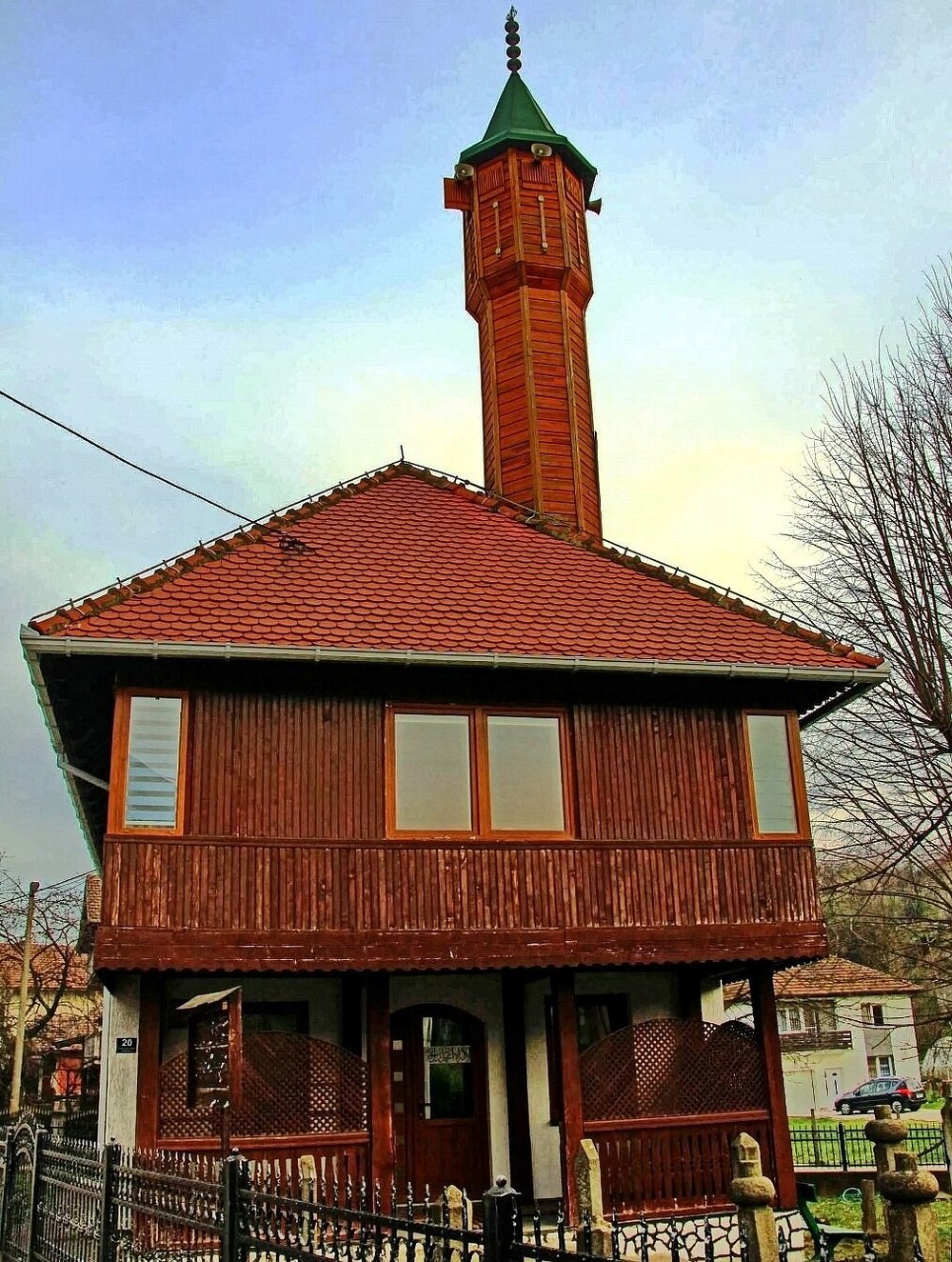
A closer look at one of Bosnia and Herzegovina’s most overlooked architectural traditions
There are some details in Bosnia and Herzegovina that you only really begin to notice after being here for a while.
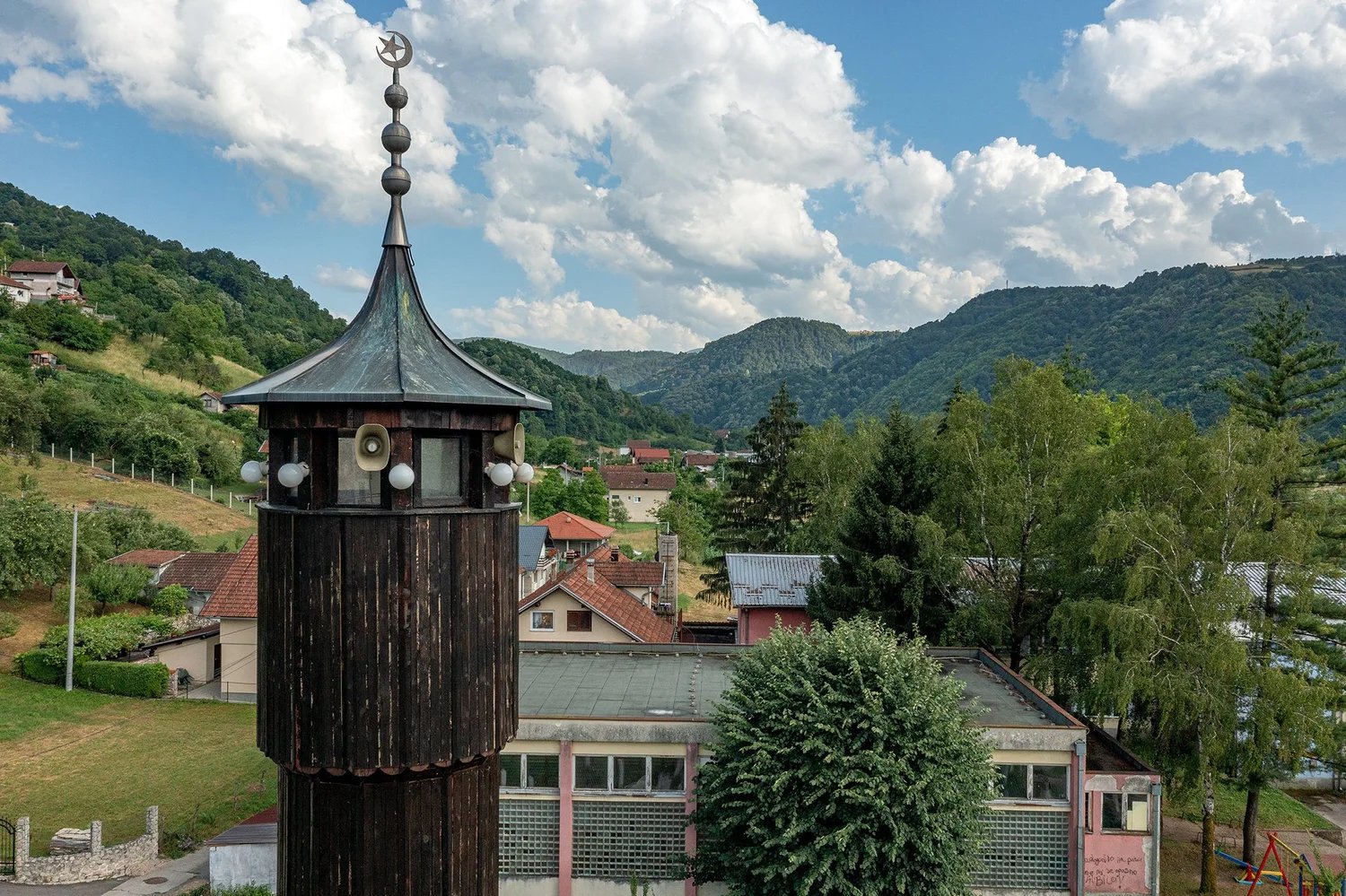
The Behram-bey (Behram-effendi) Mosque near Banja Luka
Not the obvious things.
Not the famous bridges, the grand mosques, the old town streets, or the mountain views that stop you in your tracks.
I’m talking about the smaller details.
The things you might pass by in a car and barely register.
A roofline.
A porch.
An old harem beside a quiet road.
A small mosque tucked into a village or neighbourhood.
And rising from its roof, not a tall stone minaret, but a wooden one.
I’ve become slightly fascinated by these wooden minarets on small mosques here in Bosnia and Herzegovina. The more I notice them, the more they seem to say something very deep about this country.
Most people, when they think of Islamic architecture, probably imagine grand domes, stone courtyards, tall elegant minarets, and famous city mosques. Bosnia certainly has those. Sarajevo, Mostar, Travnik, and Banja Luka all have important and beautiful examples of Ottoman Islamic architecture.
But there is another story here.
A quieter one.
The small Bosnian mosque with a wooden minaret is not trying to dominate the skyline. It is not shouting for attention. Very often, it feels almost domestic in scale, closer to the rhythm of village life than to imperial grandeur.
And that, I think, is what makes it so special.
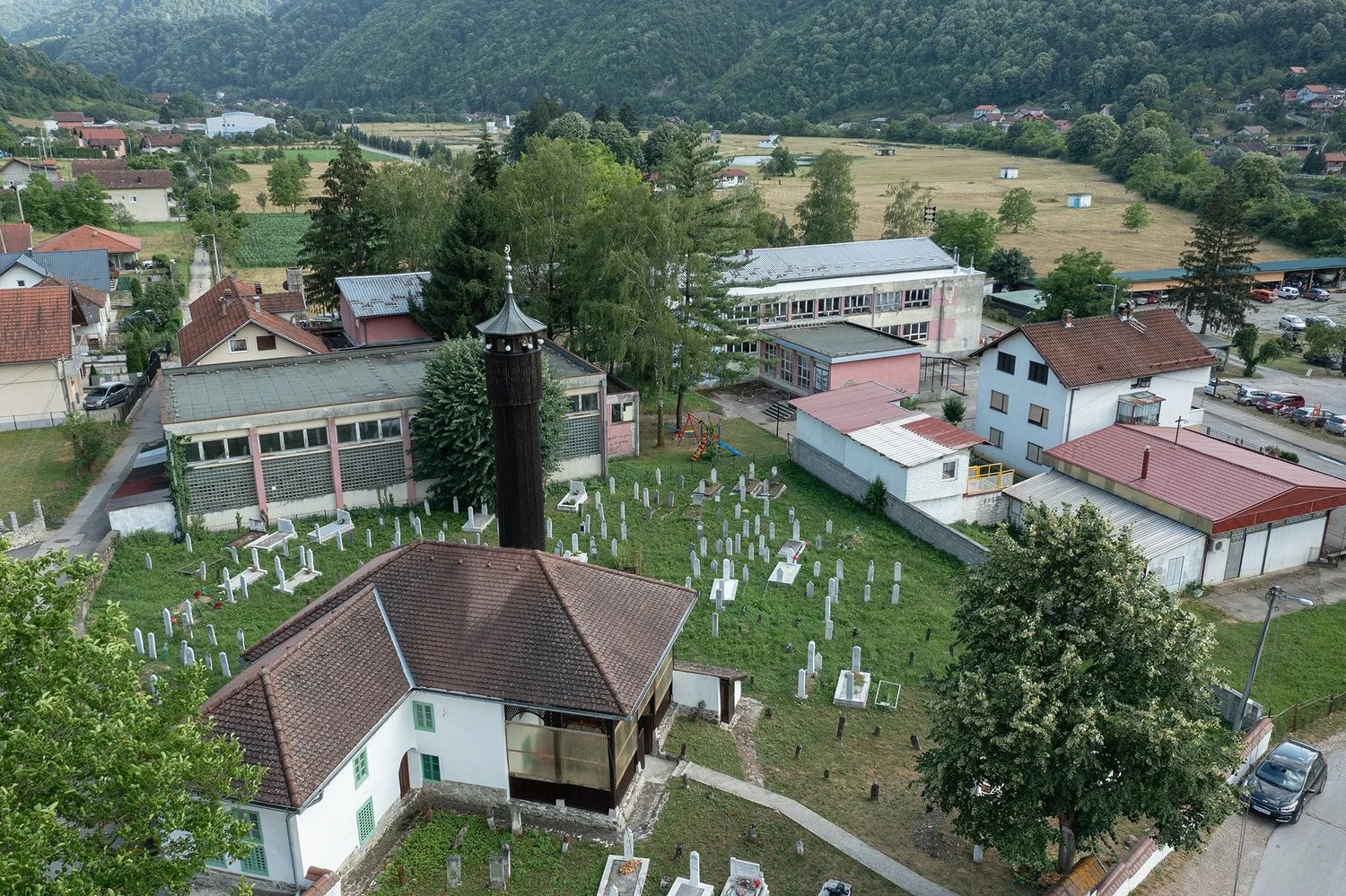
The Behram-bey (Behram-effendi) Mosque near Banja Luka
These mosques belong to the landscape. They speak of forests, timber, local craftsmen, modest communities, and faith woven into everyday life. The wooden minaret often rises directly from the roof, as though the building itself has simply grown upwards.
There is something wonderfully human about that.
Stone has permanence. Stone has authority. Stone tells you it intends to stay.
Wood is different.
Wood lives.
Wood weathers.
Wood darkens.
Wood needs care.
Perhaps that is why these minarets feel so moving. They are beautiful, but they are also vulnerable. And in Bosnia, where buildings so often carry layers of memory, loss, destruction, and rebuilding, that vulnerability matters.
Around the Banja Luka area, there are several examples of mosques with wooden minarets, and historically there were more. Some were destroyed. Some have been rebuilt. Some survive as part of a much older local architectural tradition that is easy to overlook if you are only searching for the famous landmarks.
For me, these wooden minarets are not just architectural details.
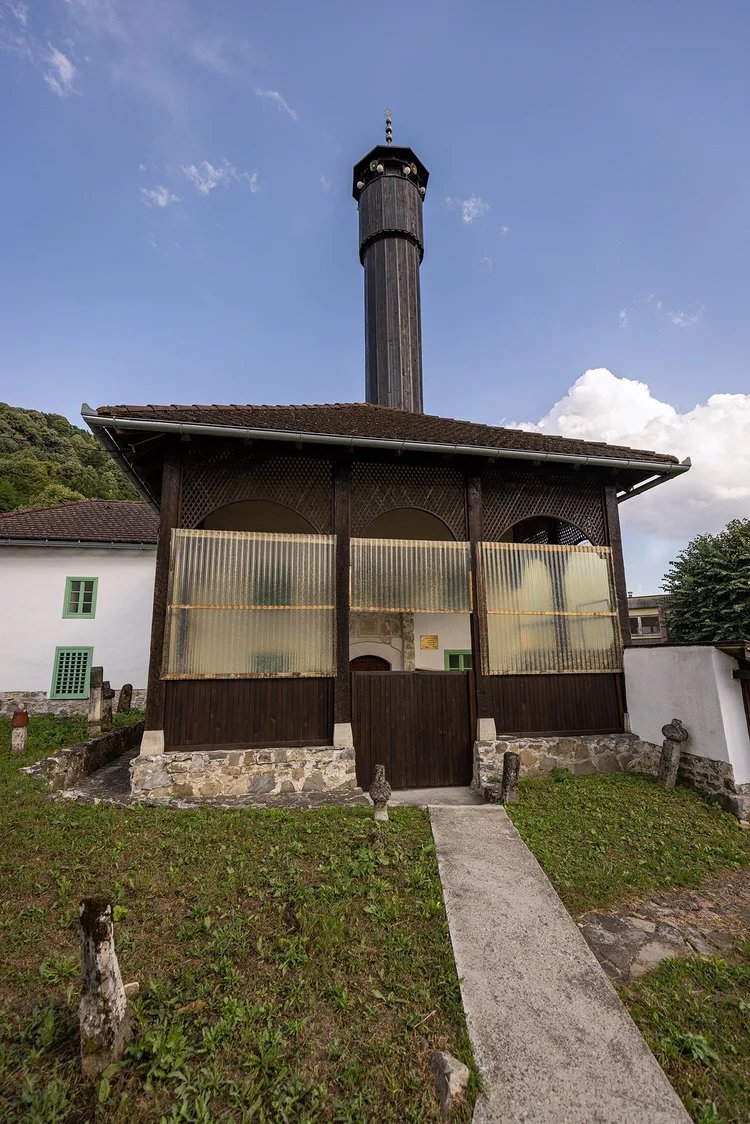
The Behram-bey (Behram-effendi) Mosque near Banja Luka
They are clues.
They remind us that Bosnia’s Islamic architecture was not only shaped by empire, but also by place. By weather. By forests. By village carpentry. By local hands.
They show how faith adapted itself to the materials and skills available in this part of the Balkans.
And they also remind us that not all heritage is loud.
Some heritage whispers.
It stands beside a road.
It hides behind trees.
It rises quietly from a roof.
It waits for someone to notice.
That is what I love about travelling slowly through Bosnia and Herzegovina. The country keeps revealing itself in layers. You think you know what you are looking at, and then suddenly a small detail opens up a much bigger story.
A wooden minaret becomes more than timber.
It becomes a sign of belonging.
A link between forest and faith.
A reminder that Bosnia’s history is not only found in its grand monuments, but also in the quiet buildings that once formed part of everyday life.
I’m currently working on a podcast episode for An Englishman in the Balkans about this very little-known part of Islamic architecture in Bosnia and Herzegovina.
It is a niche fascination, I know.
But sometimes the smallest details tell the biggest stories.